New from GEC: Nuclear Workforce in Focus, Our Case for the ARC Act, FEOC Guidance, and More



Updates & Announcements
GEC Receives $200K to Build Community Engagement Playbook
The Giving Green Fund has awarded Good Energy Collective a $200,000 grant to advance research on community engagement practices for nuclear and geothermal energy projects. The grant supports GEC’s development of a research program to compare engagement approaches across multiple community sites. The program’s goal is to determine which practices are most effective at building community agency in energy infrastructure decisions.
This work is critical because the field currently lacks empirical evidence for determining which engagement strategies work best and why. Without this information, communities, developers, and policymakers are left navigating engagement decisions without a proven playbook. As a result, community engagement efforts risk failure—trust erodes, projects face delays and cancellations, and nuclear deployment stalls. This research is part of GEC’s broader effort to identify barriers to nuclear deployment and develop solutions that support an equitable clean energy transition.
This program builds on more than two years of research conducted by GEC as part of a Department of Energy initiative on collaboration-based siting for spent nuclear fuel storage.
Learn more about Giving Green’s award in our full announcement.

GEC Receives Grant to Strengthen Evidence Base for Community Engagement
The Giving Green Fund has awarded Good Energy Collective a $200,000 grant to advance research on community engagement practices for nuclear and geothermal energy projects. The grant supports GEC’s development of a research program to compare engagement approaches across multiple community sites. The program’s goal is to determine which practices are most effective at building community agency in energy infrastructure decisions.
This work is critical because the field currently lacks empirical evidence for determining which engagement strategies work best and why. Without this information, communities, developers, and policymakers are left navigating engagement decisions without a proven playbook. As a result, community engagement efforts risk failure—trust erodes, projects face delays and cancellations, and nuclear deployment stalls. This research is part of GEC’s broader effort to identify barriers to nuclear deployment and develop solutions that support an equitable clean energy transition.
This program builds on more than two years of research conducted by GEC as part of a Department of Energy initiative on collaboration-based siting for spent nuclear fuel storage.
Learn more about Giving Green’s award in our full announcement.
A Federal Tool for De-Risking New Nuclear
In February, Senators Jim Risch, R-Idaho, and Ruben Gallego, D-Ariz., introduced the Accelerating Reliable Capacity (ARC) Act of 2026, a bipartisan bill that would commit up to $3.6 billion in federal funding to help get new nuclear reactors built. The bill targets a problem that has long stalled nuclear development: financial risk. Early-of-a-kind reactor projects carry cost uncertainties that deter private capital, and without a mechanism for sharing that risk, promising projects don't move forward.
ARC would address this problem through enhanced loan guarantees and limited cost-share support administered by the Department of Energy’s Office of Energy Dominance Financing (formerly the Loan Programs Office). The program includes meaningful guardrails—stringent readiness requirements, independent cost review, and ongoing federal oversight—with funding applied only after a project is placed in service, tying federal support directly to project completion.
The bill stands out for its approach to cost distribution. Because ARC would be funded through the federal tax base rather than through utility rates, it would distribute costs broadly and more progressively. Drawing from the national tax base ensures that costs are shared by everyone—not just by ratepayers in a single service territory.
With electricity demand surging, the need for clean, firm generation is acute. ARC represents a fiscally sound step in the right direction, charting an accelerated deployment path on more equitable financial footing. Good Energy Collective supports the ARC Act, and we look forward to engaging with policymakers as it moves forward.
Read our full statement.
In the News
GEC in Bloomberg, Politico on Proposed Easing of California Nuclear Moratorium
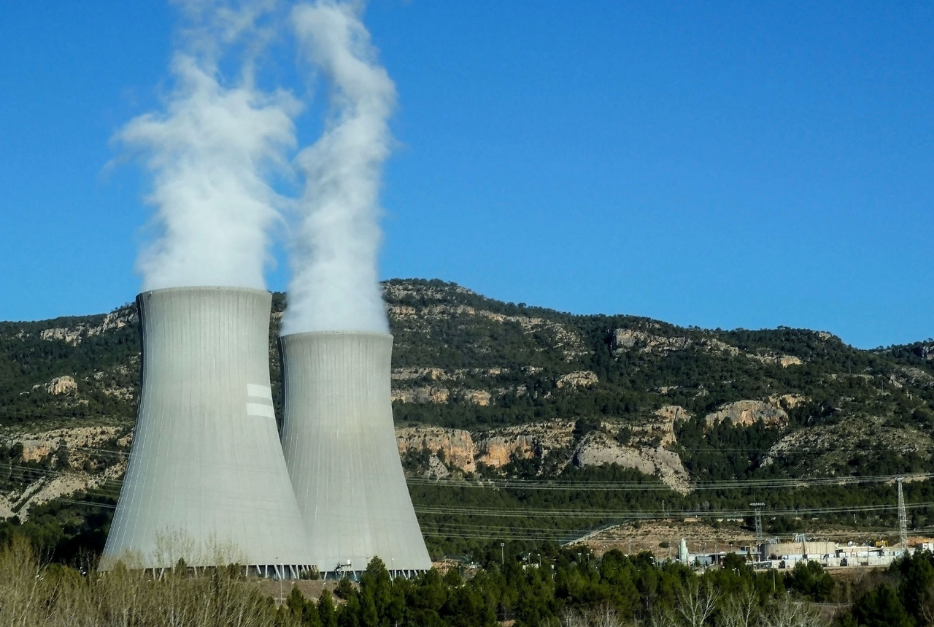
GEC Executive Director Erik Funkhouser spoke to Bloomberg about California’s bipartisan bill, introduced last month, to exempt advanced nuclear reactors from the state’s 50-year moratorium on new nuclear. As Erik notes, blanket moratoria are falling away as states contend with growing energy demand and climate goals. California in particular may find upholding such a ban to be untenable, given the state’s evolving role as an innovation hub for advanced nuclear technologies. The article, which was also picked up by Politico’s E&E News, explores this and other perspectives on the proposed changes, and highlights GEC’s tracking of similar legislative efforts in other states.
Read the full story.
GEC Makes Progressive Case for ARC Act in The Washington Times
In a March 9 piece in The Washington Times, GEC Executive Director Erik Funkhouser and Senior Policy Associate Julia Sweatman make the case for nuclear as the only proven clean energy source capable of delivering firm power at scale in a meaningful timeframe. They point to the Accelerating Reliable Capacity (ARC) Act as a pragmatic mechanism for mitigating the financing risks that have complicated investment in first-of-a-kind reactors.
Read the full piece.
On the Road

Workforce Takes Center Stage at Nuclear Energy Summit
The nuclear buildout won’t succeed on technological advancement and financing alone—it needs workers and community trust, and the planning windows for both are shrinking. GEC Executive Director Erik Funkhouser headed to Washington, DC, last month to dig into these challenges at the Nuclear Energy Summit, hosted by the Midwestern Governors Association. The summit convened state leaders, federal officials, and industry stakeholders at the Nuclear Energy Institute to discuss the current and future role of nuclear energy in the United States. Erik led a panel discussion on the workforce and community engagement dynamics that will shape the success of nuclear deployment.
The discussion surfaced the sheer scale of labor demand—construction of a reactor typically requires 7,000 to 9,000 workers on-site daily—with panelists agreeing that the biggest bottleneck will be in the skilled trades. Addressing it will require investing now in training pipelines for electricians, welders, and carpenters. On the community side, panelists noted that regional differences in engagement practices present opportunities for cross-learning, enabling communities that have already navigated siting and permitting challenges to share their experiences with others.
These topics are increasingly important as momentum for nuclear deployment builds, and we look forward to keeping these conversations going, to ensure that workforce readiness and community input remain policy priorities.
What We're Tracking

FEOC Guidance: What It Means for Nuclear
The Treasury Department and the IRS have released the first interim guidance on how to implement the material assistance restrictions under the foreign entity of concern (FEOC) provisions of the One Big Beautiful Bill Act (OBBBA), signed into law last summer. Public comments are open through March 30.
Under OBBBA, a project’s eligibility for certain tax credits—the Advanced Manufacturing Tax Credit (45X), the Clean Energy Production Credit (45Y), and the Clean Electricity Investment Credit (48E)—depends in part on whether it has received “material assistance” from a FEOC, referred to in the statute as a “prohibited foreign entity” (PFE). Laid out in Notice 2026-15, the new guidance establishes a framework for making that determination, providing a method for calculating the material assistance cost ratio (MACR), which determines whether a project has received too much assistance from a PFE. The guidance includes interim safe harbor provisions—applicable until Treasury issues more comprehensive proposed regulations—that establish standardized calculation methods developers can use to assess compliance without building an analysis from scratch.
The notice establishes three types of safe harbors: an identification safe harbor for determining which components to include in the MACR calculation, a cost percentage safe harbor for assigning cost values to those components, and a supplier certification safe harbor that allows developers to rely on supplier attestations rather than independently tracing PFE status up the supply chain. The notice also clarifies a key rule around IP licensing agreements with specified foreign entities. Any such agreement entered into or modified after July 4, 2025, will trigger a finding of effective control—potentially disqualifying the project from tax credits.
Important questions remain. Treasury has not yet addressed key areas of concern, such as parameters for licensing agreements and debt arrangements with PFEs. According to the notice, more comprehensive proposed regulations are forthcoming.
States Eyeing Nuclear
Nuclear power is drawing greater policy attention at the state level, with governors and state legislators looking seriously at how—and whether—to expand nuclear capacity. Wisconsin Gov. Tony Evers has launched a nuclear siting study in partnership with University of Wisconsin-Madison, and Illinois Gov. JB Pritzker has issued an executive order directing state agencies to facilitate the development of 2 GW of new nuclear capacity. Back in January, Iowa Gov. Kim Reynolds signed a similar executive order, establishing a Nuclear Energy Task Force to advise on nuclear development in the state. Meanwhile, New York Sen. Kevin Parker, chair of the state’s Senate Energy Committee, has announced plans to introduce a two-year statewide moratorium on new nuclear—a counterweight to New York Gov. Kathy Hochul’s push for up to 5 GW of new nuclear capacity in the state. Nuclear moratoria are top of mind in California as well—for more on that, see “GEC in Bloomberg, Politico on Proposed Easing of California Nuclear Moratorium,” in In the News, above.
New Fuel Fabrication
The Nuclear Regulatory Commission (NRC) last month granted X-energy subsidiary TRISO-X a 40-year commercial license to manufacture HALEU fuel at two facilities in Oak Ridge, Tennessee. The facilities, TX-1 and TX-2, are the first fuel fabrication plants to be licensed by the NRC in more than 50 years. (Standard Nuclear, which began producing HALEU TRISO fuel in January, operates under alternative authorization through a special Department of Energy program.) TX-1 is under construction; TX-2 is currently in the design phase.
Deadline April 1: DOE Nuclear Lifecycle Innovation Campuses RFI
Responses are due April 1 to the Request for Information (RFI) issued by the Department of Energy (DOE) inviting states to express interest in hosting Nuclear Lifecycle Innovation Campuses. These facilities would support integrated activities across the entire nuclear fuel cycle, from enrichment and fuel fabrication to spent fuel reprocessing and waste disposition.
Read DOE’s announcement. | Read the full RFI.