Community Research Milestone, What Meta’s Nuclear Deals Mean, and More

GEC in the Field
Collaboration-Based Siting: Building an Evidence Base for Community Decision-Making
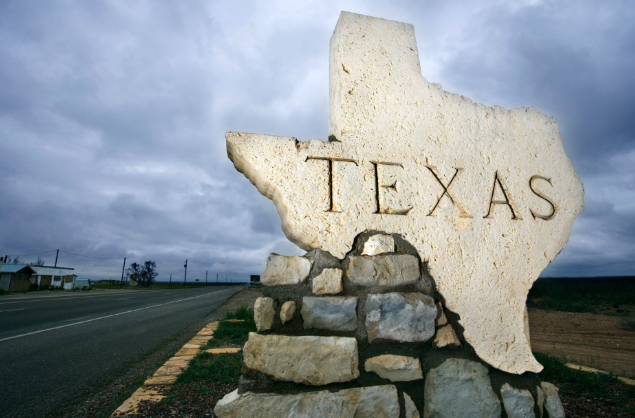
After more than two years of fieldwork, Good Energy Collective reached a milestone in December: Our team completed the final community engagements for our Collaboration-Based Siting research. During four days of intensive workshops in Cameron, Texas, 30 Milam County residents explored what it would take to build genuine agreement on complex energy infrastructure decisions.
The workshops were high-energy, participatory engagements aimed at understanding how communities make shared decisions. Participants—some seasoned in local governance, others new to it—worked through structured exercises designed to understand what builds or erodes trust, how to foster genuine agency, and what makes outcomes feel legitimate. The subject matter was federal staging facilities for used nuclear fuel, but the insights apply to how communities negotiate any complex energy infrastructure proposal. Participants assessed risks and benefits, mapped barriers to trust and designed mechanisms to overcome them, debated governance models, and defined what would make a final decision endorsable, regardless of the outcome.
With engagements now complete, our team turns to synthesis—combining what we gathered in Cameron with workshop data from Jackson, Wyoming, and Vernon, Vermont. We have a wealth of material to work with, and we’ll be conducting robust analysis to identify patterns in how communities deliberate, where trust breaks down, and which process designs are most effective at yielding genuine, durable agreement. The findings will inform evidence-based guidelines for DOE on collaboration-based siting, with our final report coming out this spring. This work also lays a foundation for continued research as GEC builds an empirical basis for understanding what it takes to earn lasting community buy-in for energy infrastructure development.
Good Energy in the News

Opinion | To Power AI Energy Needs, Nuclear Is Going to Have a Comeback
AI infrastructure is expanding fast—but it needs reliable electricity, and grids in many regions are already strained.
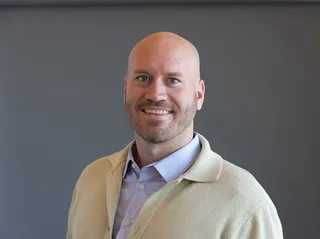
In Devex, GEC Executive Director Erik Funkhouser argues that development finance institutions can no longer avoid nuclear—and should use their leverage to require strong conditions for safety, transparency, and governance.
Read the op-ed.
Good Energy on the Road

From left: Leslie Dewan, Neutronic Designs; Guido Núñez-Mujica, Anthropocene Institute; Erik Funkhouser, Good Energy Collective; Zainab Gilani, Cleantech Group
Investors Catching the Nuclear Tailwinds
GEC Executive Director Erik Funkhouser spoke to an audience of investors, entrepreneurs, and energy innovators at the 2026 Cleantech Forum North America conference in San Diego on January 27. His panel, The New Nuclear Renaissance: Where Capital Meets Climate Impact, examined what’s driving renewed investment interest in nuclear energy—from surging power demand fueled by AI and data centers to evolving financing models and a shifting regulatory landscape.
He was joined by Zainab Gilani, Energy & Power Associate at the Cleantech Group; Leslie Dewan, founder and CEO of Neutronic Designs; and Guido Núñez-Mujica, Director of Data Science at the Anthropocene Institute, which co-hosted the panel. The discussion focused on the technical, financial, and policy conditions influencing whether nuclear projects can move from concept to construction, highlighting the opportunities and constraints shaping the next phase of nuclear power deployment. Funkhouser discussed near-term opportunities where commercial innovation is opening viable pathways to market entry, particularly for advanced reactors and facility uprates, and addressed the policy and regulatory conditions most likely to affect project bankability.
These are issues at the heart of GEC’s research, which examines the policy, market, and community conditions needed to deploy nuclear energy responsibly and effectively.
Updates and Announcements
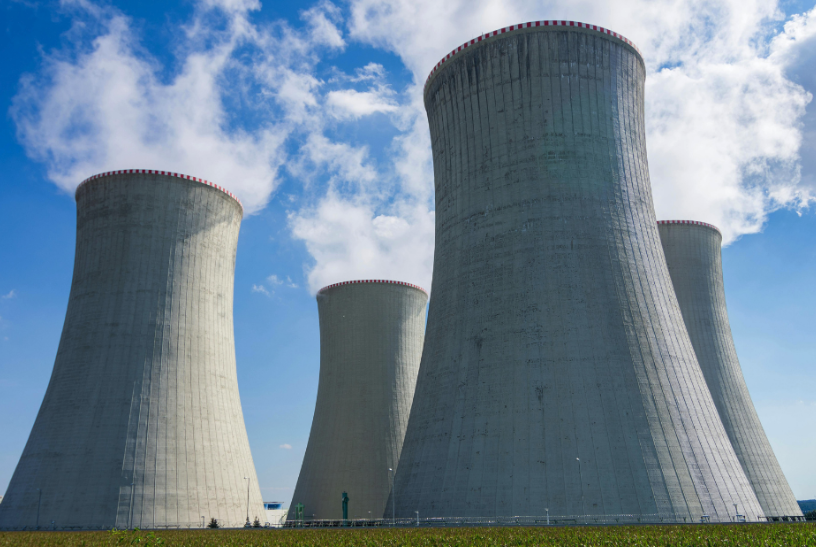
Opinion | What Meta’s Nuclear Deals Could Mean for Communities and the Grid
AI developer Meta has signed agreements with TerraPower, Vistra, and Oklo to support up to 6.6 GW of new and existing nuclear capacity by 2035, representing one of the largest corporate commitments to nuclear energy to date.
GEC’s latest statement examines what these deals could mean for the communities that host these projects and the workers they employ. The deals have real potential to sustain jobs, attract investment to rural areas, and advance nuclear commercialization—but realization of those benefits depends on how the deals are structured, whether communities have a voice in shaping them, and how costs and risks are shared across the grid.
Read the full statement.
What We're Tracking
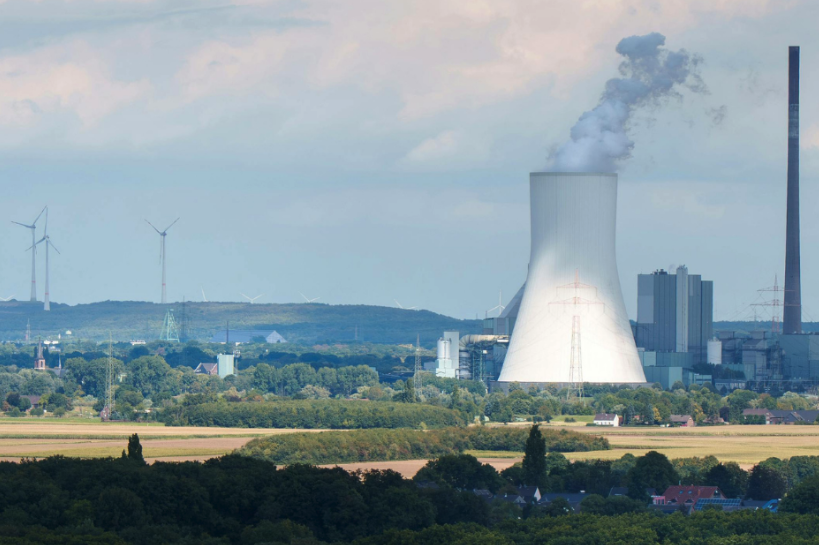
DOE Seeks States to Host Nuclear Lifecycle Innovation Campuses
The Department of Energy has issued a Request for Information (RFI) inviting states to express interest in hosting Nuclear Lifecycle Innovation Campuses—facilities that would support integrated activities across the entire nuclear fuel cycle, from enrichment and fuel fabrication to spent fuel reprocessing and waste disposition. According to DOE’s announcement, the campuses could also host advanced reactors, power generation, and co-located data centers, depending on state priorities.
The RFI is an early step, but the concept raises important questions about how communities will be engaged in decisions to host these facilities and what benefit-sharing and risk-allocation structures might look like. Responses are due April 1, 2026.
Read DOE’s announcement. | Read the full RFI.
Public Comments Open on NEPA Categorical Exclusion for Advanced Reactors
Under a new notice issued by the Department of Energy, qualifying advanced reactors subject to DOE’s environmental review, such as those at DOE sites or receiving DOE funding, will be exempt from a full environmental impact assessment under the National Environmental Policy Act (NEPA). To qualify, projects must demonstrate that reactor design and operational plans limit off-site risk and that waste can be managed per applicable requirements. Effective Feb. 2, the rule establishes a categorical exclusion from NEPA for the authorization, siting, construction, operation, and decommissioning of advanced nuclear reactors.
Although streamlining environmental review for advanced reactors could accelerate deployment, poor implementation of these exemptions could undermine public trust in nuclear safety oversight. Ensuring transparent qualification criteria and robust engagement with the public will be essential to maintaining the credibility of this approach.
DOE is accepting public comments on the new categorical exclusion through March 4.
Read the Federal Register notice.
On Our Radar: Nuclear Funding and Fuel Supply
It’s been a busy start to 2026 for nuclear energy policy. Here are a couple more developments worth noting:
Nuclear funding bill signed. The FY2026 Energy and Water Development appropriations law includes $1.785 billion for DOE’s Office of Nuclear Energy and $3.1 billion in reprogrammed funding to support projects under the Advanced Reactor Demonstration Program. The law also provides $150 million for nuclear project lending. More from ANS Nuclear Newswire.
$2.7 billion to expand domestic uranium enrichment. DOE awarded three companies—American Centrifuge Operating, General Matter, and Orano Federal Services—contracts totaling $2.7 billion to build out LEU and HALEU enrichment capacity over the next decade, with the goal of reducing reliance on foreign fuel suppliers. Read DOE’s announcement.