Report
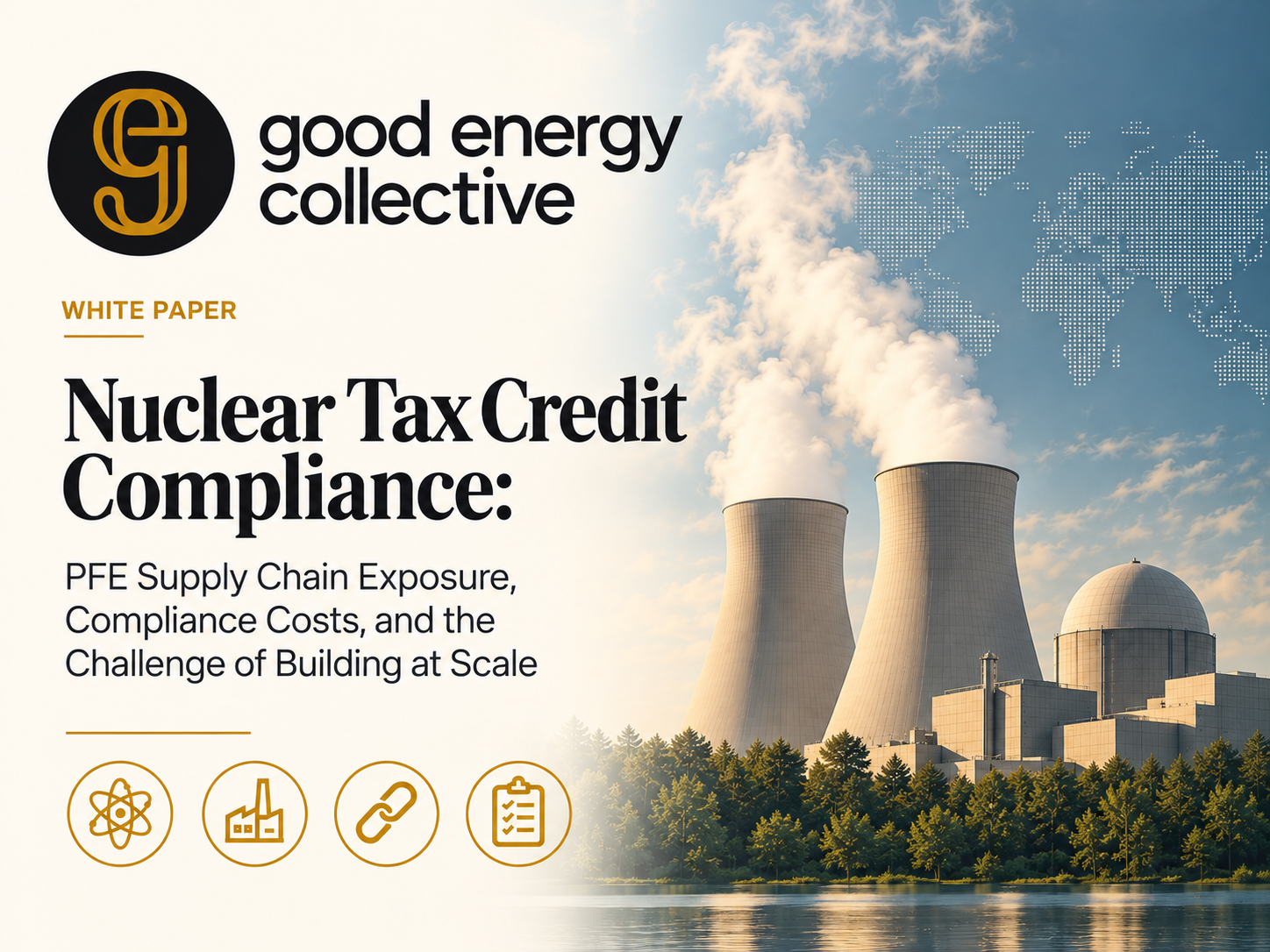
In isolation, a US nuclear project could be built with allied, non-PFE supply chains and qualify for the §45Y and §48E tax credits that make new reactors financeable. But reactors are not built in isolation. Allied forging and manufacturing capacity is a shared global resource, and a US project entering procurement today competes with European and other builds already in the queue for the same finite pool of suppliers. Using a component-level model of 125 manufactured components across two reactor types, this analysis finds that once that global competition is accounted for, meeting the Material Assistance Cost Ratio limits on Prohibited Foreign Entity content becomes difficult for the AP1000 and structurally out of reach for advanced reactors, whose fuel-cycle and hardware inputs have no allied supply at scale. When projects cannot meet the PFE rules, they forfeit the investment tax credit in full, and without that credit the financing does not come together and the reactors do not get built. The paper documents the structure and scale of this challenge so that policy responses can proceed from an accurate factual foundation.
This white paper presents Good Energy Collective's PFE Compliance Model and its results: a component-level analysis of how the Prohibited Foreign Entity (PFE) supply chain rules attached to the §45Y and §48E tax credits affect the financeability of new nuclear projects. In isolation, a US reactor could be built on allied supply chains and earn the credits that make it financeable, but allied manufacturing is a shared global resource, and once a US project competes with other builds in the global queue, meeting the PFE limits becomes difficult for the AP1000 and structurally out of reach for advanced reactors. Because failing the test forfeits the investment tax credit in full, and that credit is what makes projects financeable, the practical risk is that reactors do not get built. The analysis is available in three parts:
Executive Summary — A concise overview of the model, the principal findings, and their policy implications for readers who need the conclusions without the full methodology.
Full White Paper — The complete analysis, presenting the model, the AP1000 and HTGR results across global build scenarios, and the supply chain dynamics that drive compliance outcomes.
Technical Appendices — The underlying model architecture, global deployment pipeline data, allied manufacturing capacity figures, and the full component database with PFE exposure estimates.
%201.svg)
Good Energy Collective is a policy research organization focused on the role of nuclear energy in an equitable clean energy transition. We conduct rigorous, independent research to understand the barriers to responsible nuclear deployment and to develop evidence-based solutions.